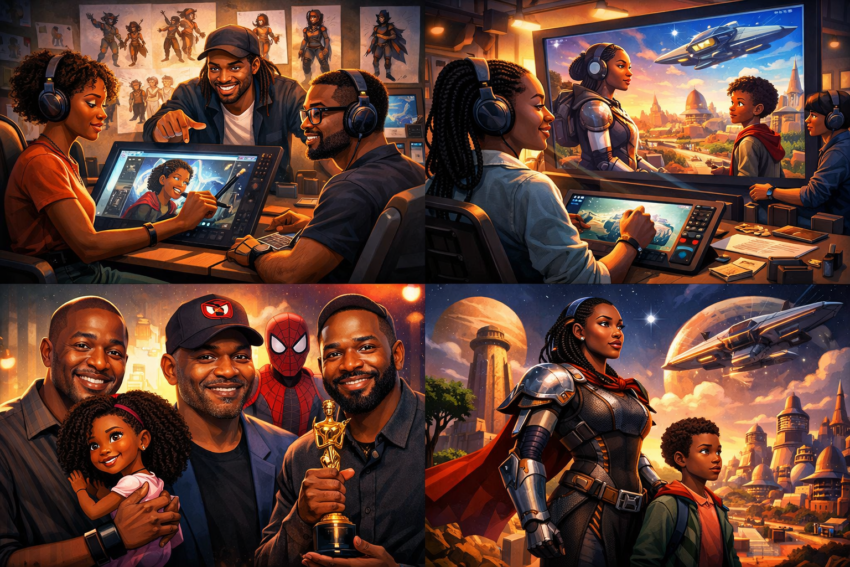
By Afro Verse Magazine
Animation has become one of the most powerful storytelling mediums in the modern world. From blockbuster films and television series to video games and online content, animated stories shape how audiences imagine heroes, cultures, and the future. For decades, however, the animation industry lacked diversity both on screen and behind the scenes.
Today, that is beginning to change.
A new generation of Black animators, filmmakers, and creative entrepreneurs are launching animation studios, producing independent projects, and building companies dedicated to telling stories rooted in African and African American culture. These creators are not only increasing representation in animation—they are also expanding the creative possibilities of the medium.
The rise of Black animation studios represents a shift in the industry, one that is opening doors for new voices and inspiring the next generation of storytellers.
A Long Road Toward Representation
Historically, Black artists have contributed greatly to animation but were rarely given opportunities to lead major projects or create original stories centered on Black experiences. For many years, the industry was dominated by large studios with limited diversity in leadership roles.
As a result, animated characters and storylines often failed to reflect the richness of Black culture, history, and imagination.
Despite these barriers, many Black artists continued to work in animation, gradually carving out space for new ideas and perspectives. Their persistence laid the foundation for the creative movement we see today.
Over the past two decades, audiences have begun demanding more authentic representation in media. This shift, combined with technological advances that make animation tools more accessible, has helped empower a new wave of creators.
Breakthrough Creators Changing the Industry
Several influential animators and filmmakers have played a major role in opening doors for Black storytellers.
One important figure is Bruce W. Smith, the creator of the animated television series The Proud Family. The show introduced audiences to a modern Black family navigating everyday life, friendships, and social issues. Its success demonstrated that stories centered on Black characters could resonate with audiences of all backgrounds.
Another trailblazer is Peter Ramsey, who made history as the first Black director to win the Academy Award for Best Animated Feature for his work on Spider-Man: Into the Spider-Verse. The film’s focus on the character Miles Morales introduced a new generation of viewers to a diverse superhero whose story reflects multicultural identity.
Meanwhile, filmmaker Matthew A. Cherry created the award-winning animated short film Hair Love. The film celebrates Black fatherhood and natural hair culture while highlighting everyday moments of love and care within Black families.
Projects like these have proven that audiences are eager for stories that celebrate diversity and authenticity.
The Rise of Independent Black Animation Studios
Alongside these high-profile creators, a growing number of independent Black-owned animation studios are emerging. Many of these studios are producing animated shorts, web series, educational content, and concept projects that showcase innovative storytelling.
Unlike traditional studios, independent creators often operate with smaller teams and budgets, but they make up for it with creativity and digital innovation. Modern animation software allows artists to produce professional-quality work from home studios or small creative spaces.
Crowdfunding platforms, social media, and streaming services have also made it easier for creators to share their work directly with audiences around the world.
This new ecosystem has allowed Black animation studios to experiment with unique storytelling styles, visual aesthetics, and cultural themes that might not have been possible in traditional Hollywood environments.
The Influence of Afrofuturism
One of the most exciting developments in modern animation is the growing influence of Afrofuturism.
Afrofuturism is a cultural movement that blends science fiction, African history, mythology, and futuristic technology to imagine new possibilities for the future. In animation, this often means creating visually stunning worlds inspired by African art, architecture, fashion, and philosophy.
Afrofuturistic animation might explore ideas such as:
- Advanced African civilizations powered by innovative technology
- Space exploration led by African descendants
- Futuristic cities inspired by traditional African design
- Heroes whose powers are connected to ancestral knowledge
These creative worlds allow animators to challenge traditional narratives and present a vision of the future where Black culture and innovation play a central role.
For publications like Afro Verse Magazine, Afrofuturism represents more than entertainment—it represents a powerful framework for reimagining the future.
Streaming Platforms and New Opportunities
The rapid expansion of streaming services has also created opportunities for diverse creators in animation.
Companies such as Netflix, Disney, and Amazon are constantly seeking new original content to attract audiences around the world.
This demand has opened the door for fresh voices and innovative projects.
Independent creators can now pitch animated shows or collaborate with production companies that specialize in diverse storytelling. Some studios are even partnering with streaming platforms to develop original animated series that highlight global cultures and perspectives.
As the competition for content grows, studios are recognizing that audiences want stories that reflect the diversity of the real world.
Inspiring Future Animators
Perhaps the most powerful impact of this movement is the inspiration it provides for young creators.
Today’s generation of students has access to tools that previous generations could only dream of. Animation software, digital art tablets, and online learning platforms make it possible for aspiring animators to start building skills from home.
Young artists interested in animation can explore areas such as:
- Character design
- Digital illustration
- Storyboarding
- 2D animation
- 3D modeling
- Visual effects
- Game animation
Schools, community programs, and online platforms are increasingly offering courses that introduce students to animation and digital storytelling.
For many young Black artists, seeing creators who look like them succeed in animation can be a powerful motivator.
Representation behind the scenes shows future animators that they too can build careers in the creative industries.
Animation, Culture, and the Future
Animation is more than entertainment—it is a cultural force that shapes how people imagine the world and the future.
When diverse voices participate in creating animated stories, the medium becomes richer and more imaginative. New characters, settings, and ideas expand the possibilities of storytelling and allow audiences to experience cultures they may never have encountered before.
The rise of Black animation studios is helping to redefine what animation can be.
From independent creators producing innovative web series to filmmakers winning international awards, Black animators are proving that their voices belong at the center of the industry.
A New Era for Storytelling
The growth of Black animation studios signals the beginning of a new era in media and storytelling.
As technology continues to evolve and access to creative tools expands, more artists will have the opportunity to share their ideas with global audiences. These creators will continue to build worlds inspired by culture, history, and imagination.
For readers of Afro Verse Magazine, this movement represents something exciting: a future where Black creators not only participate in animation but lead the industry in innovation and creativity.
The stories being created today will inspire the heroes, dreamers, and innovators of tomorrow.
And in those stories, audiences everywhere will see a future that is more diverse, more imaginative, and more powerful than ever before. 🚀
If you’d like, I can also help you next with:
• Designing a magazine layout for this article
• Creating 5 illustrations specifically for Afro Verse Magazine
• Writing another 1,200-word feature like “Top Black Game Developers Changing the Industry.”
The Rise of Black Animation Studios
By Afro Verse Magazine
Animation has become one of the most powerful storytelling mediums in the modern world. From blockbuster films and television series to video games and online content, animated stories shape how audiences imagine heroes, cultures, and the future. For decades, however, the animation industry lacked diversity both on screen and behind the scenes.
Today that is beginning to change.
A new generation of Black animators, filmmakers, and creative entrepreneurs are launching animation studios, producing independent projects, and building companies dedicated to telling stories rooted in African and African American culture. These creators are not only increasing representation in animation—they are also expanding the creative possibilities of the medium.
The rise of Black animation studios represents a shift in the industry, one that is opening doors for new voices and inspiring the next generation of storytellers.
A Long Road Toward Representation
Historically, Black artists have contributed greatly to animation but were rarely given opportunities to lead major projects or create original stories centered on Black experiences. For many years, the industry was dominated by large studios with limited diversity in leadership roles.
As a result, animated characters and storylines often failed to reflect the richness of Black culture, history, and imagination.
Despite these barriers, many Black artists continued to work in animation, gradually carving out space for new ideas and perspectives. Their persistence laid the foundation for the creative movement we see today.
Over the past two decades, audiences have begun demanding more authentic representation in media. This shift, combined with technological advances that make animation tools more accessible, has helped empower a new wave of creators.
Breakthrough Creators Changing the Industry
Several influential animators and filmmakers have played a major role in opening doors for Black storytellers.
One important figure is Bruce W. Smith, the creator of the animated television series The Proud Family. The show introduced audiences to a modern Black family navigating everyday life, friendships, and social issues. Its success demonstrated that stories centered on Black characters could resonate with audiences of all backgrounds.
Another trailblazer is Peter Ramsey, who made history as the first Black director to win the Academy Award for Best Animated Feature for his work on Spider-Man: Into the Spider-Verse. The film’s focus on the character Miles Morales introduced a new generation of viewers to a diverse superhero whose story reflects multicultural identity.
Meanwhile, filmmaker Matthew A. Cherry created the award-winning animated short film Hair Love. The film celebrates Black fatherhood and natural hair culture while highlighting everyday moments of love and care within Black families.
Projects like these have proven that audiences are eager for stories that celebrate diversity and authenticity.
The Rise of Independent Black Animation Studios
Alongside these high-profile creators, a growing number of independent Black-owned animation studios are emerging. Many of these studios are producing animated shorts, web series, educational content, and concept projects that showcase innovative storytelling.
Unlike traditional studios, independent creators often operate with smaller teams and budgets, but they make up for it with creativity and digital innovation. Modern animation software allows artists to produce professional-quality work from home studios or small creative spaces.
Crowdfunding platforms, social media, and streaming services have also made it easier for creators to share their work directly with audiences around the world.
This new ecosystem has allowed Black animation studios to experiment with unique storytelling styles, visual aesthetics, and cultural themes that might not have been possible in traditional Hollywood environments.
The Influence of Afrofuturism
One of the most exciting developments in modern animation is the growing influence of Afrofuturism.
Afrofuturism is a cultural movement that blends science fiction, African history, mythology, and futuristic technology to imagine new possibilities for the future. In animation, this often means creating visually stunning worlds inspired by African art, architecture, fashion, and philosophy.
Afrofuturistic animation might explore ideas such as:
- Advanced African civilizations powered by innovative technology
- Space exploration led by African descendants
- Futuristic cities inspired by traditional African design
- Heroes whose powers are connected to ancestral knowledge
These creative worlds allow animators to challenge traditional narratives and present a vision of the future where Black culture and innovation play a central role.
For publications like Afro Verse Magazine, Afrofuturism represents more than entertainment—it represents a powerful framework for reimagining the future.
Streaming Platforms and New Opportunities
The rapid expansion of streaming services has also created opportunities for diverse creators in animation.
Companies such as Netflix, Disney, and Amazon are constantly seeking new original content to attract audiences around the world.
This demand has opened the door for fresh voices and innovative projects.
Independent creators can now pitch animated shows or collaborate with production companies that specialize in diverse storytelling. Some studios are even partnering with streaming platforms to develop original animated series that highlight global cultures and perspectives.
As the competition for content grows, studios are recognizing that audiences want stories that reflect the diversity of the real world.
Inspiring Future Animators
Perhaps the most powerful impact of this movement is the inspiration it provides for young creators.
Today’s generation of students has access to tools that previous generations could only dream of. Animation software, digital art tablets, and online learning platforms make it possible for aspiring animators to start building skills from home.
Young artists interested in animation can explore areas such as:
- Character design
- Digital illustration
- Storyboarding
- 2D animation
- 3D modeling
- Visual effects
- Game animation
Schools, community programs, and online platforms are increasingly offering courses that introduce students to animation and digital storytelling.
For many young Black artists, seeing creators who look like them succeed in animation can be a powerful motivator.
Representation behind the scenes shows future animators that they too can build careers in the creative industries.
Animation, Culture, and the Future
Animation is more than entertainment—it is a cultural force that shapes how people imagine the world and the future.
When diverse voices participate in creating animated stories, the medium becomes richer and more imaginative. New characters, settings, and ideas expand the possibilities of storytelling and allow audiences to experience cultures they may never have encountered before.
The rise of Black animation studios is helping to redefine what animation can be.
From independent creators producing innovative web series to filmmakers winning international awards, Black animators are proving that their voices belong at the center of the industry.
A New Era for Storytelling
The growth of Black animation studios signals the beginning of a new era in media and storytelling.
As technology continues to evolve and access to creative tools expands, more artists will have the opportunity to share their ideas with global audiences. These creators will continue to build worlds inspired by culture, history, and imagination.
For readers of Afro Verse Magazine, this movement represents something exciting: a future where Black creators not only participate in animation but lead the industry in innovation and creativity.
The stories being created today will inspire the heroes, dreamers, and innovators of tomorrow.
And in those stories, audiences everywhere will see a future that is more diverse, more imaginative, and more powerful than ever before. 🚀
If you’d like, I can also help you next with:
• Designing a magazine layout for this article
• Creating 5 illustrations specifically for Afro Verse Magazine
• Writing another 1,200-word feature like “Top Black Game Developers Changing the Industry.”
By Afro Verse Magazine
Animation has become one of the most powerful storytelling mediums in the modern world. From blockbuster films and television series to video games and online content, animated stories shape how audiences imagine heroes, cultures, and the future. For decades, however, the animation industry lacked diversity both on screen and behind the scenes.
Today that is beginning to change.
A new generation of Black animators, filmmakers, and creative entrepreneurs are launching animation studios, producing independent projects, and building companies dedicated to telling stories rooted in African and African American culture. These creators are not only increasing representation in animation—they are also expanding the creative possibilities of the medium.
The rise of Black animation studios represents a shift in the industry, one that is opening doors for new voices and inspiring the next generation of storytellers.
A Long Road Toward Representation
Historically, Black artists have contributed greatly to animation but were rarely given opportunities to lead major projects or create original stories centered on Black experiences. For many years, the industry was dominated by large studios with limited diversity in leadership roles.
As a result, animated characters and storylines often failed to reflect the richness of Black culture, history, and imagination.
Despite these barriers, many Black artists continued to work in animation, gradually carving out space for new ideas and perspectives. Their persistence laid the foundation for the creative movement we see today.
Over the past two decades, audiences have begun demanding more authentic representation in media. This shift, combined with technological advances that make animation tools more accessible, has helped empower a new wave of creators.
Breakthrough Creators Changing the Industry
Several influential animators and filmmakers have played a major role in opening doors for Black storytellers.
One important figure is Bruce W. Smith, the creator of the animated television series The Proud Family. The show introduced audiences to a modern Black family navigating everyday life, friendships, and social issues. Its success demonstrated that stories centered on Black characters could resonate with audiences of all backgrounds.
Another trailblazer is Peter Ramsey, who made history as the first Black director to win the Academy Award for Best Animated Feature for his work on Spider-Man: Into the Spider-Verse. The film’s focus on the character Miles Morales introduced a new generation of viewers to a diverse superhero whose story reflects multicultural identity.
Meanwhile, filmmaker Matthew A. Cherry created the award-winning animated short film Hair Love. The film celebrates Black fatherhood and natural hair culture while highlighting everyday moments of love and care within Black families.
Projects like these have proven that audiences are eager for stories that celebrate diversity and authenticity.
The Rise of Independent Black Animation Studios
Alongside these high-profile creators, a growing number of independent Black-owned animation studios are emerging. Many of these studios are producing animated shorts, web series, educational content, and concept projects that showcase innovative storytelling.
Unlike traditional studios, independent creators often operate with smaller teams and budgets, but they make up for it with creativity and digital innovation. Modern animation software allows artists to produce professional-quality work from home studios or small creative spaces.
Crowdfunding platforms, social media, and streaming services have also made it easier for creators to share their work directly with audiences around the world.
This new ecosystem has allowed Black animation studios to experiment with unique storytelling styles, visual aesthetics, and cultural themes that might not have been possible in traditional Hollywood environments.
The Influence of Afrofuturism
One of the most exciting developments in modern animation is the growing influence of Afrofuturism.
Afrofuturism is a cultural movement that blends science fiction, African history, mythology, and futuristic technology to imagine new possibilities for the future. In animation, this often means creating visually stunning worlds inspired by African art, architecture, fashion, and philosophy.
Afrofuturistic animation might explore ideas such as:
- Advanced African civilizations powered by innovative technology
- Space exploration led by African descendants
- Futuristic cities inspired by traditional African design
- Heroes whose powers are connected to ancestral knowledge
These creative worlds allow animators to challenge traditional narratives and present a vision of the future where Black culture and innovation play a central role.
For publications like Afro Verse Magazine, Afrofuturism represents more than entertainment—it represents a powerful framework for reimagining the future.
Streaming Platforms and New Opportunities
The rapid expansion of streaming services has also created opportunities for diverse creators in animation.
Companies such as Netflix, Disney, and Amazon are constantly seeking new original content to attract audiences around the world.
This demand has opened the door for fresh voices and innovative projects.
Independent creators can now pitch animated shows or collaborate with production companies that specialize in diverse storytelling. Some studios are even partnering with streaming platforms to develop original animated series that highlight global cultures and perspectives.
As the competition for content grows, studios are recognizing that audiences want stories that reflect the diversity of the real world.
Inspiring Future Animators
Perhaps the most powerful impact of this movement is the inspiration it provides for young creators.
Today’s generation of students has access to tools that previous generations could only dream of. Animation software, digital art tablets, and online learning platforms make it possible for aspiring animators to start building skills from home.
Young artists interested in animation can explore areas such as:
- Character design
- Digital illustration
- Storyboarding
- 2D animation
- 3D modeling
- Visual effects
- Game animation
Schools, community programs, and online platforms are increasingly offering courses that introduce students to animation and digital storytelling.
For many young Black artists, seeing creators who look like them succeed in animation can be a powerful motivator.
Representation behind the scenes shows future animators that they too can build careers in the creative industries.
Animation, Culture, and the Future
Animation is more than entertainment—it is a cultural force that shapes how people imagine the world and the future.
When diverse voices participate in creating animated stories, the medium becomes richer and more imaginative. New characters, settings, and ideas expand the possibilities of storytelling and allow audiences to experience cultures they may never have encountered before.
The rise of Black animation studios is helping to redefine what animation can be.
From independent creators producing innovative web series to filmmakers winning international awards, Black animators are proving that their voices belong at the center of the industry.
A New Era for Storytelling
The growth of Black animation studios signals the beginning of a new era in media and storytelling.
As technology continues to evolve and access to creative tools expands, more artists will have the opportunity to share their ideas with global audiences. These creators will continue to build worlds inspired by culture, history, and imagination.
For readers of Afro Verse Magazine, this movement represents something exciting: a future where Black creators not only participate in animation but lead the industry in innovation and creativity.
The stories being created today will inspire the heroes, dreamers, and innovators of tomorrow.
And in those stories, audiences everywhere will see a future that is more diverse, more imaginative, and more powerful than ever before. 🚀