"Welcome to Afro Verse - Your Gateway to Afro Gaming and Afro Sci-fi"
Afro Verse Magazine
FEATURE STORY | SEPT/OCT 2026
THE ROBOTICS REVOLUTION
Black Minds Are Building Tomorrow
Why robotics could become one of the most important opportunities for the next generation of Black innovators
By Afro Verse Magazine
The future once imagined in science-fiction movies is rapidly becoming reality.
Robots are learning to move, see, communicate, assist humans, manufacture products, explore dangerous environments, support healthcare, and perform increasingly complex tasks. Artificial intelligence is giving machines new capabilities, while advances in engineering are making robots more useful and accessible.
For Black America, this technological transformation presents a critical opportunity.
We should not simply watch the robotics revolution happen. We should help build it.
FROM SCIENCE FICTION TO REALITY
For decades, robotics lived primarily in the world of science fiction.
Black writers, artists, filmmakers, and Afrofuturists imagined advanced civilizations, intelligent machines, futuristic cities, and new relationships between humans and technology.
Today, those ideas are becoming part of everyday life.
Robotics is appearing in:
Manufacturing
Healthcare
Agriculture
Transportation
Construction
Space exploration
Logistics
Education
Environmental protection
Emergency response
Entertainment
Gaming
The convergence of robotics + artificial intelligence + advanced computing could fundamentally reshape the global economy.
And that creates a question Afro Verse believes deserves serious attention:
Where will Black people fit into this future?
Our answer should be:
At the table—and in the laboratory, classroom, boardroom, and startup.
WHY BLACK PARTICIPATION MATTERS
Technology influences the way society works.
The people who design technology help determine what problems it addresses and how it is deployed.
That means diversity in robotics isn’t simply about representation. It is also about innovation and perspective.
Imagine robotics companies developing technologies specifically addressing challenges in underserved communities.
Robots for education
Affordable robots could help students learn programming, engineering, mathematics, and problem-solving through hands-on experiences.
Robots for healthcare
Robotic technologies could assist healthcare professionals, rehabilitation programs and people with disabilities.
Robots for environmental protection
Autonomous systems could help monitor waterways, inspect infrastructure and collect environmental information.
Robots for agriculture
Automation could support urban farms, greenhouses and food-production systems.
Robots for dangerous work
Robots could perform certain inspection, disaster-response and hazardous industrial tasks while keeping people farther from danger.
The possibilities are enormous.
THE BLACK ROBOTICS PIPELINE
Tomorrow’s robotics workforce must begin with today’s students.
A successful pipeline could look like this:
STUDENT → MAKER → ENGINEER → ENTREPRENEUR → INVENTOR → INDUSTRY LEADER
That journey can begin with something as simple as a robotics club.
A middle-school student builds a robot.
A high-school student learns Python or another programming language.
A college student studies mechanical engineering, computer science, or mechatronics.
An internship provides industry experience.
A young professional enters the robotics industry.
Eventually, that person might launch a company.
That’s how technological ecosystems are created.
HBCUs CAN HELP LEAD THE WAY
Historically Black Colleges and Universities have an enormous opportunity to become important centers of robotics education and research.
Imagine an HBCU robotics ecosystem connecting:
Engineering + AI + Robotics + STEM Education + Entrepreneurship + Industry
Students could work on real-world challenges while businesses gain access to a highly trained technology workforce.
HBCUs could also become incubators for Black-owned robotics startups.
The goal shouldn’t simply be producing employees for major technology companies.
The goal should also be producing the next generation of technology owners.
FROM JOBS TO OWNERSHIP
This may be the most important part of the robotics conversation.
Robotics will certainly create jobs.
But employment alone doesn’t guarantee economic power.
Ownership can.
Black entrepreneurs could build companies focused on:
Educational robots
Agricultural automation
Healthcare robotics
Drone technology
Industrial automation
Robotics maintenance
AI-powered machines
Assistive technology
Environmental robotics
Robotics software
Entertainment robotics
STEM education
A student who learns robotics today could eventually become the founder of a company employing hundreds or thousands of people.
That’s the bigger vision.
ROBOTICS MEETS AFROFUTURISM
Afro Verse Magazine exists at an unusual intersection:
Technology meets imagination.
Afrofuturism has long asked us to imagine Black futures rather than simply inherit someone else’s vision of the future.
Robotics gives us another opportunity to turn imagination into reality.
Consider the progression:
Imagine → Design → Build → Program → Test → Improve → Launch
A futuristic robot in a comic book is imagination.
A robot built by a young Black engineer is innovation.
A Black-owned robotics company is entrepreneurship.
A robotics research center in a Black community is infrastructure.
A generation of students entering STEM careers is economic transformation.
THE FUTURE NEEDS CREATORS, TOO
Robotics isn’t only for engineers.
The industry will need artists, designers, writers, educators, entrepreneurs, filmmakers, programmers, cybersecurity professionals, business leaders, and policymakers.
Imagine a future Black robotics ecosystem where:
Artists design the robots.
Engineers build them.
Programmers give them intelligence.
Entrepreneurs create companies around them.
Educators train the next generation.
Communities help determine how they are used.
That is a much bigger vision than simply teaching someone to code.
A NEW AFRO VERSE CHALLENGE
Afro Verse Magazine could help launch a Black Robotics Challenge designed to inspire young innovators.
Students could be challenged to create robotic solutions for real-world problems:
Challenge 1
Build a robot that helps protect the environment.
Challenge 2
Create a robot that helps students learn.
Challenge 3
Design technology that helps older adults live independently.
Challenge 4
Develop a robotic solution for urban agriculture.
Challenge 5
Imagine the robot that will help build tomorrow’s cities.
The winning teams could receive scholarships, mentorship, technology grants, or opportunities to present their ideas to universities and technology companies.
THE NEXT GENERATION IS WATCHING
The children growing up today will enter a world dramatically different from the one their parents experienced.
They will encounter AI systems, autonomous machines, robotics, virtual environments, and technologies that haven’t even been invented yet.
We therefore have a responsibility to prepare them.
Not simply to use technology.
But to understand it.
Not simply to consume innovation.
But to create it.
Not simply to work for technology companies.
But to own technology companies.
BUILT TO INNOVATE
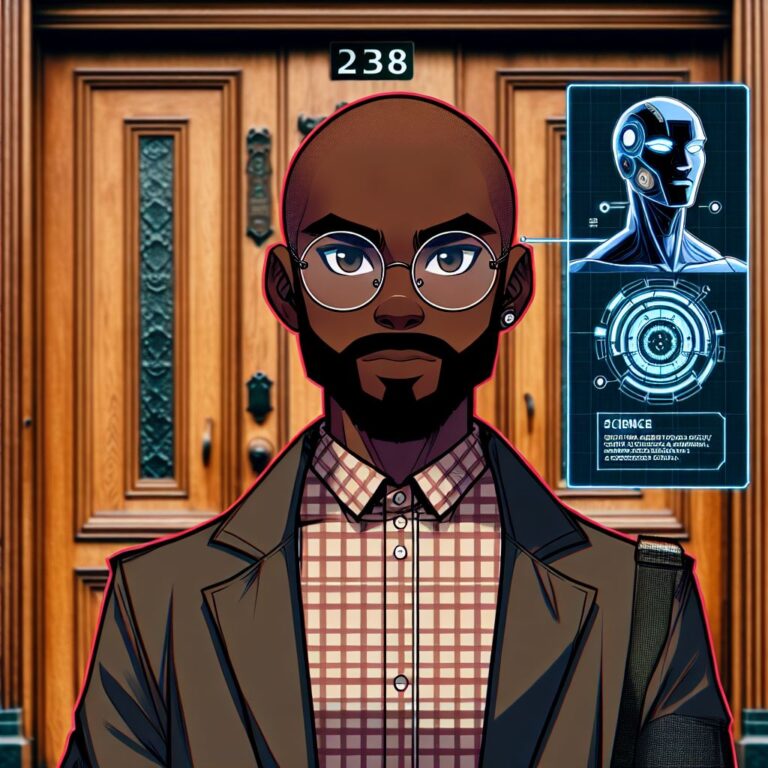
The image on this issue’s cover represents more than a futuristic scene.
It represents a challenge.
A Black engineer working beside an advanced robot symbolizes a future where Black people aren’t standing outside the technological revolution looking in.
We are building.
We are designing.
We are experimenting.
We are solving problems.
We are creating companies.
We are educating our children.
And we are imagining possibilities that don’t exist yet.
THE AFRO VERSE VISION
Afro Verse Magazine can become a major hub connecting science fiction, technology, robotics, AI, gaming, anime, fantasy, horror, comics, and STEM education.
But the deeper mission is bigger than entertainment.
It is about using imagination to inspire education, innovation, entrepreneurship, and opportunity.
Because the future shouldn’t belong only to the people who invent the technology.
It should also belong to the people who dare to imagine something new.
THE FUTURE IS NOT WAITING.
The robotics revolution has already begun.
The question is not whether robots will change the world.
The question is:
WHO WILL BUILD THE WORLD THAT COMES NEXT?
For Afro Verse, the answer is clear.
BLACK MINDS BUILD TOMORROW.
OUR STORIES. OUR FUTURE. OUR UNIVERSE.
AFRO VERSE MAGAZINE | SEPT/OCT 2026
NEWS & UPDATES
Anime has become a global cultural phenomenon, reaching audiences across every continent and introducing...
FEAR OUR STORIES
The Rise of Black Horror
How Black writers, filmmakers, artists, and creators are...
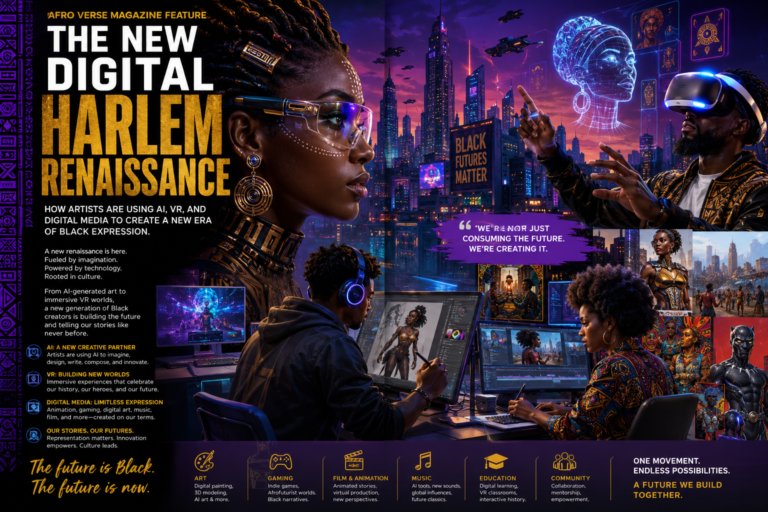
How Artists Are Using AI, VR, and Digital Media to Create a New Era of Black Expression
Nearly a...
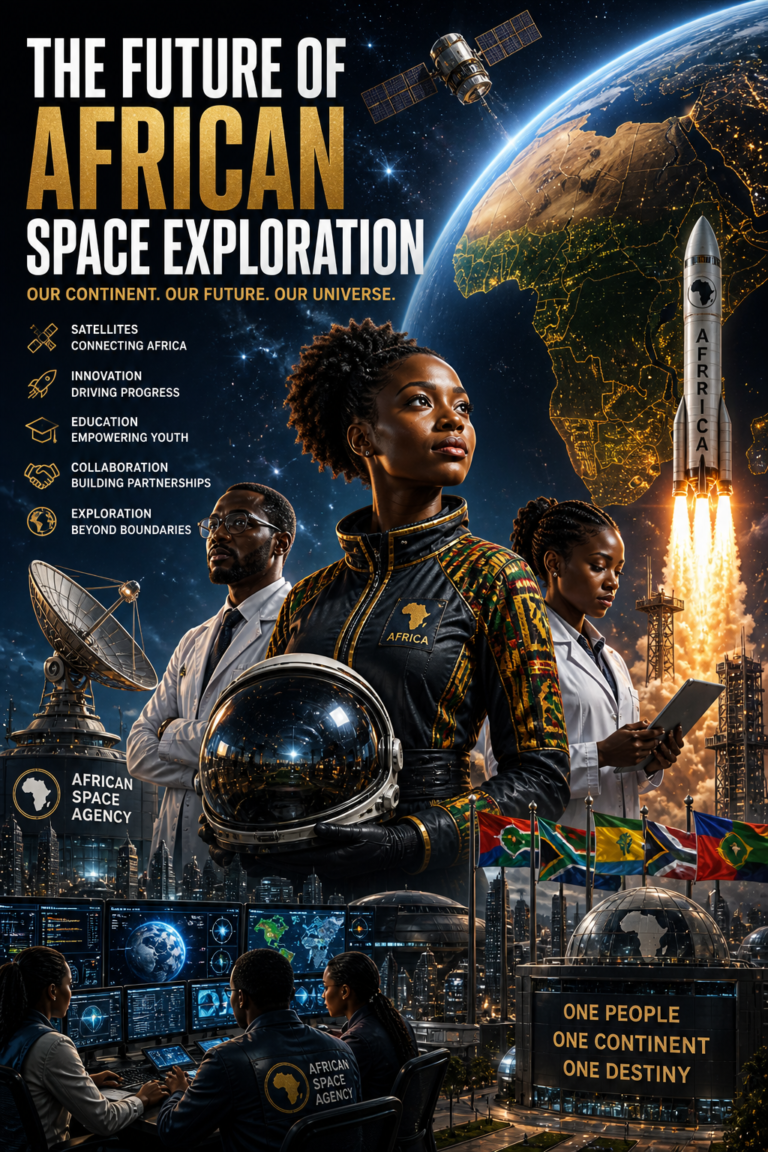
For generations, space exploration has been dominated by a handful of global powers. But today, a new...
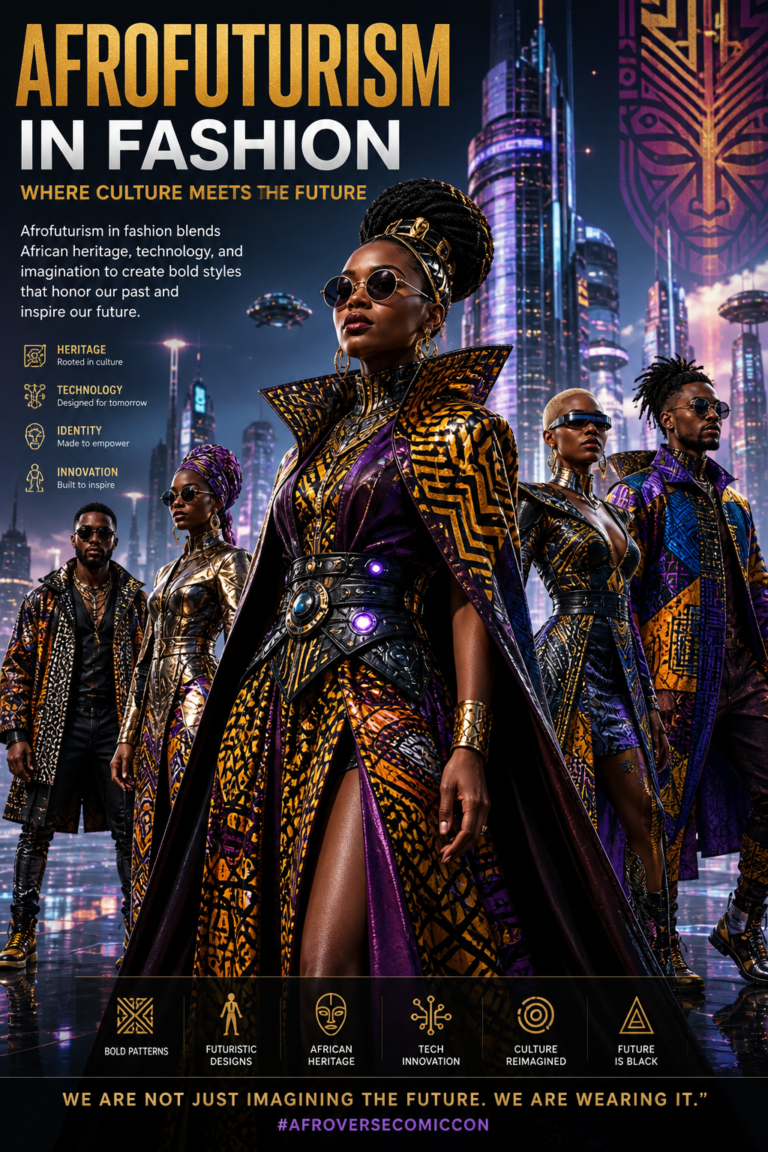
Across the worlds of art, music, literature, and film, a powerful cultural movement is transforming how...
A Global Reset Through the Lens of Afrofuturism
🚀 Introduction: The Day Everything Changed
Imagine...
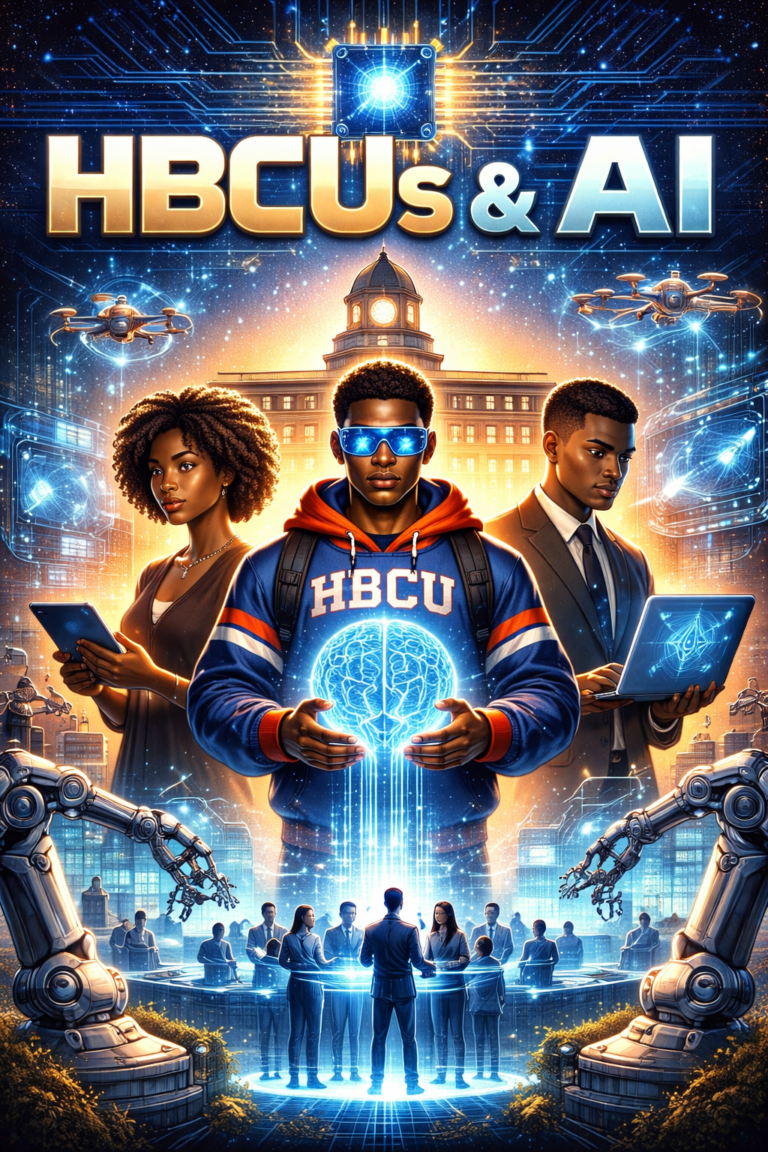
1. Build AI-Centered Academic Programs
HBCUs can lead by embedding AI into their core curriculum across...
🚀 A New Global Reality
What if the global tech capital of the world wasn’t Silicon Valley—but...
For decades, global technology leadership has been associated with places like Silicon Valley, Europe,...
Across the country, a new wave of creativity is reshaping the comic book industry. At the center of this...
Afro Verse Magazine: Our Vision for the Black Future
Welcome to Afro Verse Originals, the creative soul of Afro Verse Magazine. More than just stories, art, and innovation — this is where we chart the constellations of the Black future. In every issue, we venture beyond the boundaries of what has been and into the realms of what could be, should be, and must be for Black people across the globe.

"An inclusive space for exploring and celebrating Black contributions to the gaming world, with a focus on Indie games and innovative storytelling"