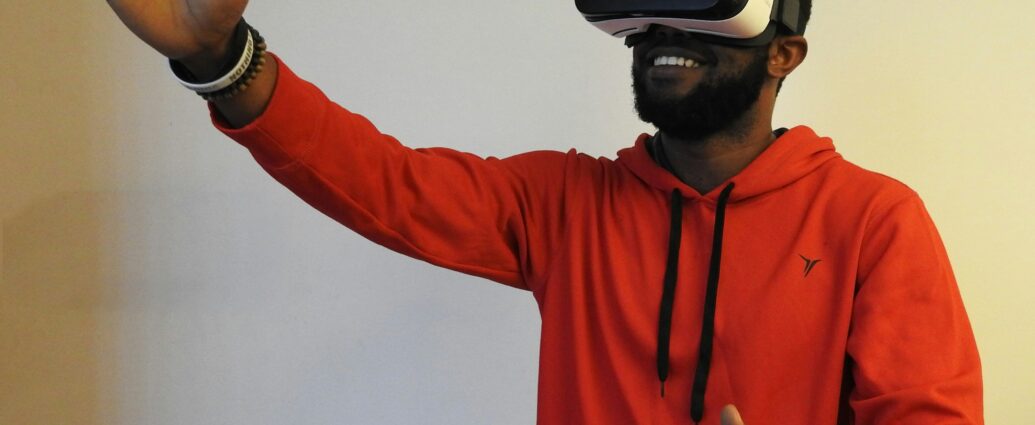
Imagine standing beside Harriet Tubman on the Underground Railroad. Imagine walking through the bustling streets of Harlem during the Harlem Renaissance or witnessing the March on Washington as if you were there. Thanks to advances in virtual reality (VR), these experiences are becoming possible in ways that previous generations could only dream about.
Welcome to the intersection of Black History and Virtual Reality.
Bringing History to Life
For many students, history is often taught through textbooks, photographs, and lectures. While these tools remain important, virtual reality offers something different: immersion.
Instead of reading about historical events, students can step inside carefully recreated environments and experience history firsthand. Virtual reality allows users to explore historical locations, hear stories from multiple perspectives, and engage with important moments in a deeply personal way.
The result is an educational experience that can make history more engaging, memorable, and meaningful.
Preserving Stories for Future Generations
Many important stories from African American history have not always received the attention they deserve. VR technology creates new opportunities for preserving and sharing these stories with a global audience.
Digital historians, museums, educators, and technology developers are working together to create virtual experiences that showcase:
- The Underground Railroad
- Historically Black Colleges and Universities (HBCUs)
- The Civil Rights Movement
- The Harlem Renaissance
- Black Wall Street
- African kingdoms and empires
- Black inventors and innovators
- Cultural landmarks across the African diaspora
These experiences help ensure that future generations can connect with history in innovative ways.
Education Beyond the Classroom
Virtual reality is changing education by allowing students to learn through exploration.
Imagine a middle school student visiting a virtual reconstruction of Ancient Timbuktu. Or a high school student exploring a digital museum dedicated to Black scientists and inventors. These immersive experiences can spark curiosity and encourage deeper learning.
Educators increasingly recognize that interactive learning often creates stronger engagement than passive instruction.
A New Era for Museums
Museums are also embracing virtual technology.
Through VR experiences, visitors can explore exhibits that extend beyond physical walls. Historical artifacts can be presented alongside interactive stories, reconstructed environments, and digital guides that provide context and insight.
Virtual museums can reach audiences worldwide, making Black history more accessible than ever before.
The Rise of Digital Storytelling
Virtual reality is not just transforming education. It is revolutionizing storytelling.
Writers, filmmakers, artists, and game developers are using immersive technologies to tell stories rooted in Black history, culture, and identity. These experiences allow audiences to become participants rather than spectators.
The future may include interactive historical dramas, educational adventure games, and virtual heritage tours that blend entertainment with learning.
Challenges and Opportunities
Like any emerging technology, VR faces challenges. Access to equipment, development costs, and digital infrastructure can create barriers.
However, as technology becomes more affordable and widespread, opportunities continue to grow. Partnerships among schools, cultural institutions, nonprofits, and technology companies can help expand access and ensure that more communities benefit from these innovations.
Reimagining How We Learn
History is more than a collection of dates and facts. It is a living story that shapes the present and influences the future.
Virtual reality offers a powerful new way to connect with that story. By combining technology with education, creators are finding innovative methods to preserve Black history, celebrate cultural achievements, and inspire the next generation of leaders, scholars, and innovators.
The future of history may not be found solely in books.
It may be experienced through a headset, explored through a digital world, and remembered through immersive journeys that bring the past to life.
Pull Quote
“Virtual reality doesn’t replace history. It allows us to step inside it.”
Editor’s Perspective
As immersive technology becomes more accessible, Black history has an unprecedented opportunity to reach new audiences. Virtual reality can transform education from observation into participation, helping students understand not just what happened, but what it may have felt like to live through these historic moments.
Future Possibilities
- Virtual Civil Rights tours
- Interactive HBCU history experiences
- Digital African kingdoms and empires
- Black inventor and scientist simulations
- Virtual museums and cultural centers
- Afrofuturist educational experiences
- Immersive storytelling and gaming