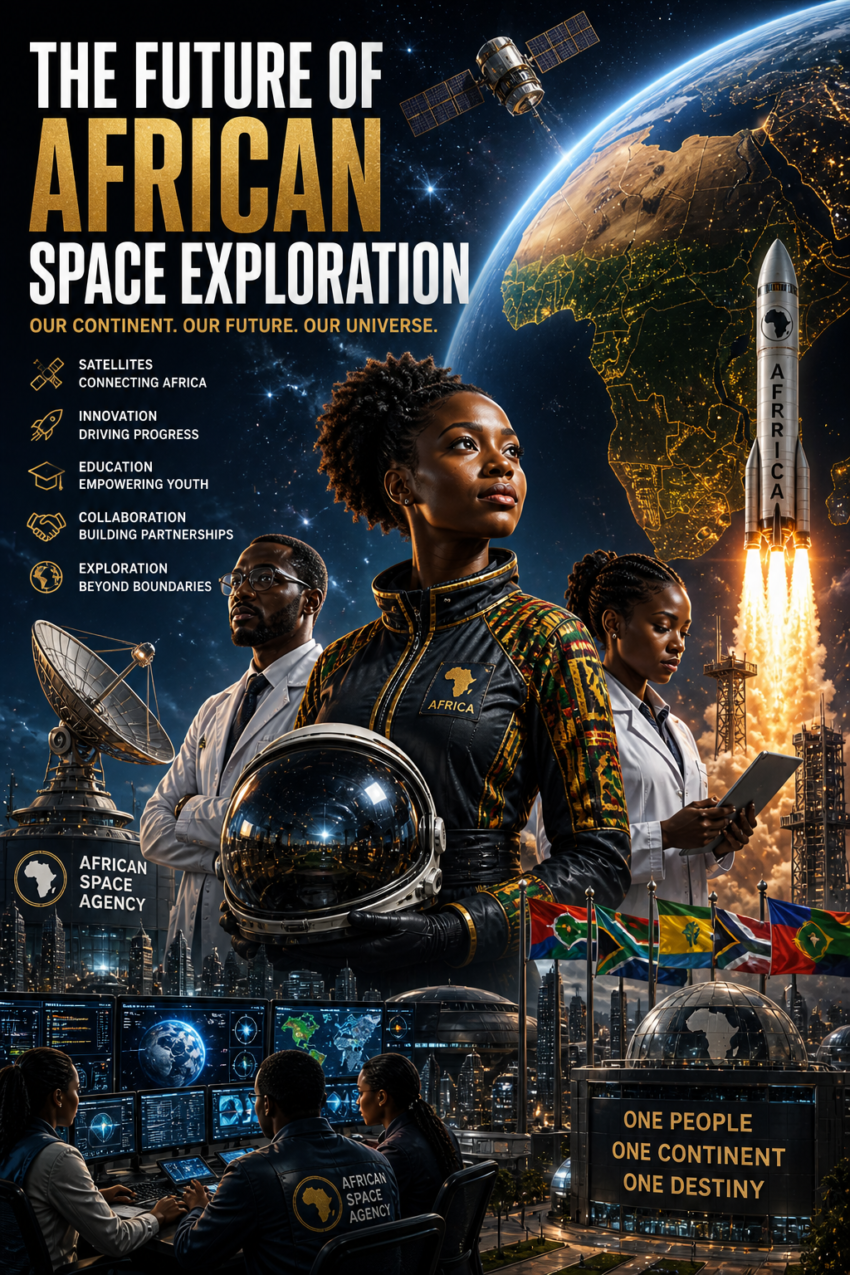
For generations, space exploration has been dominated by a handful of global powers. But today, a new player is steadily rising—Africa.
Across the continent, nations are investing in satellites, research, and innovation, signaling the beginning of a powerful new era. The future of African space exploration is no longer a distant dream—it is becoming reality.
Africa’s Growing Space Ambitions
One of the biggest developments in this movement is the creation of the African Space Agency, an initiative designed to unify space efforts across African nations.
Countries like Nigeria, South Africa, Egypt, and Kenya have already launched satellites for communication, weather monitoring, and environmental tracking.
These advancements are not just about exploration—they are about solving real-world problems, including:
- Climate monitoring
- Agriculture optimization
- Disaster management
- Internet connectivity
Space technology is becoming a tool for development across Africa.
From Satellites to Space Innovation
Africa’s space journey is still in its early stages, but the potential is enormous.
Universities and research institutions are training the next generation of engineers, scientists, and innovators. Private companies and startups are also entering the space sector, bringing fresh ideas and investment.
This growth is laying the foundation for:
- African-built satellites
- Regional space research centers
- Advanced aerospace engineering programs
- Future launch capabilities
The continent is building the infrastructure needed to compete in the global space economy.
Afrofuturism and the Vision of Space
Beyond science and technology, space exploration has always been deeply connected to imagination.
This is where Afrofuturism plays a powerful role.
Afrofuturism has long imagined African civilizations thriving in space—colonizing planets, building interstellar empires, and leading technological revolutions.
Artists like Sun Ra envisioned cosmic African identities decades ago, while modern creators continue to expand these ideas through films, comics, and literature.
These visions inspire real-world innovation.
The Role of Youth and Education
One of the most exciting aspects of Africa’s space future is its youth.
Africa has one of the youngest populations in the world, and many young people are entering STEM fields, including aerospace engineering and computer science.
Programs across the continent are encouraging students to:
- Build small satellites
- Learn coding and robotics
- Participate in global science competitions
This new generation could become the scientists and astronauts who take Africa further into space.
Challenges and Opportunities
While the future is promising, challenges remain.
- Limited funding
- Infrastructure gaps
- Brain drain (talent leaving for other countries)
However, these challenges also present opportunities for partnerships, investment, and innovation.
Global collaborations with organizations like NASA and private space companies could accelerate Africa’s progress.
A New Space Race—With Africa Included
The global space race is evolving, and Africa is positioning itself to be part of it.
As technology becomes more accessible and affordable, more countries are entering the space sector. Africa’s unique perspective and growing talent pool could lead to new innovations that reshape the industry.
Final Thoughts
The future of African space exploration is not just about reaching the stars—it’s about transforming life on Earth.
From improving communication to addressing climate challenges, space technology has the potential to uplift communities across the continent.
And through platforms like Afro Verse Magazine, these stories of innovation, imagination, and progress can inspire a new generation to dream bigger.
Because the next chapter of space exploration may very well be written from Africa.