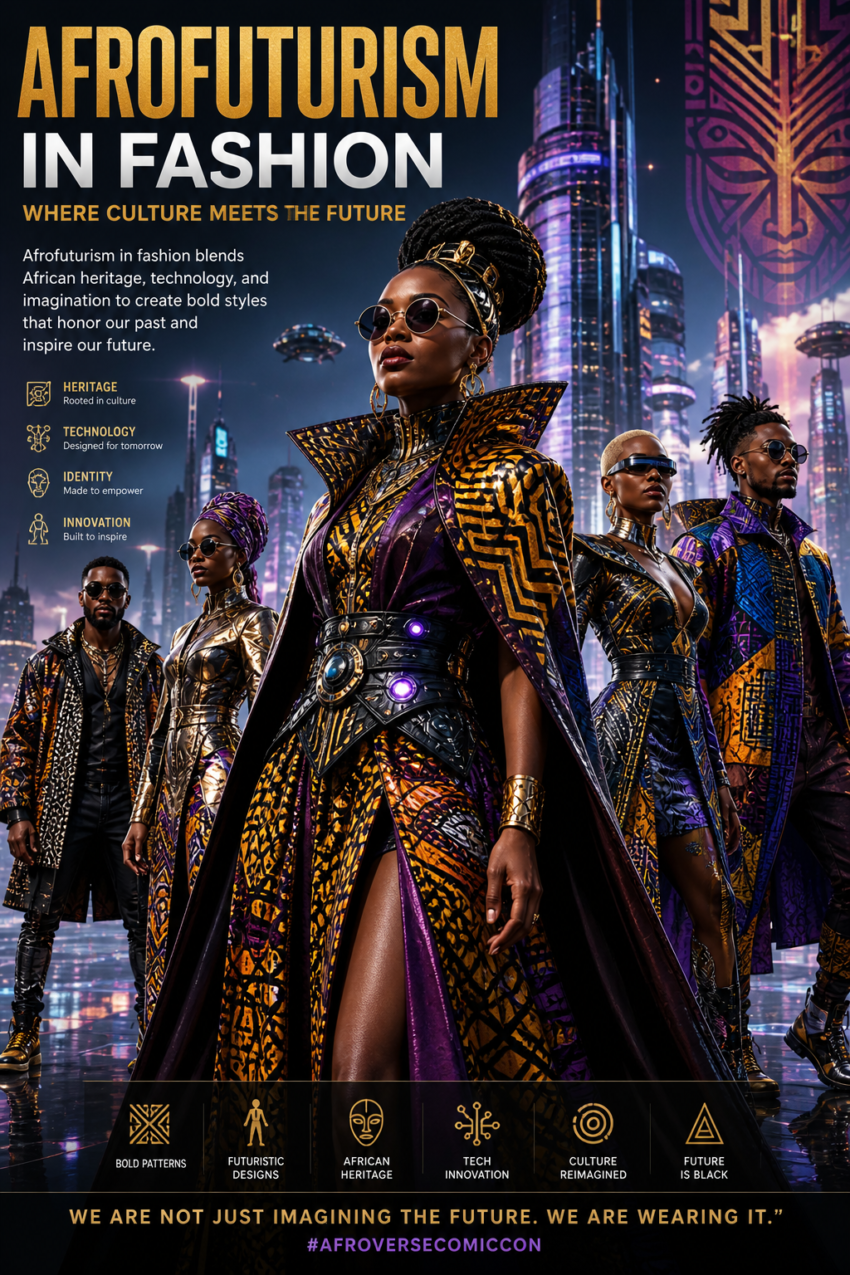
Across the worlds of art, music, literature, and film, a powerful cultural movement is transforming how people imagine the future. That movement is Afrofuturism.
Afrofuturism blends science fiction, African history, technology, and imagination to create visions of the future where Black culture, creativity, and innovation thrive. It challenges traditional narratives and offers a bold new perspective—one where African and African diasporic people are central to the story of tomorrow.
A Movement Rooted in History
Although Afrofuturism feels modern, its roots stretch back decades. One of the earliest pioneers was jazz musician Sun Ra, who famously claimed he came from Saturn and used music to explore cosmic themes of Black identity and liberation.
Through his performances and recordings, Sun Ra imagined a universe where African people were not limited by history but were part of a vast interstellar civilization.
These ideas helped shape the foundations of Afrofuturism.
Afrofuturism in Literature
Afrofuturism found powerful expression in literature through groundbreaking authors such as Octavia E. Butler.
Her iconic novel Kindred combined time travel with the history of slavery, forcing readers to confront the past while imagining the future.
Butler’s work opened doors for many Black writers who wanted to explore science fiction through cultural storytelling.
Today, Afrofuturist literature continues to grow as authors imagine futuristic African civilizations, space exploration, and advanced technologies.
Afrofuturism in Film and Pop Culture
In recent years, Afrofuturism exploded into mainstream culture through films like Black Panther.
The film introduced audiences to Wakanda—a fictional African nation with incredibly advanced technology and a strong cultural identity.
For many viewers, Wakanda represented something rarely seen in mainstream media: a vision of Africa that was powerful, innovative, and futuristic.
The global success of Black Panther showed that audiences were eager to see more Afrofuturist storytelling.
Technology, Art, and the Future
Afrofuturism is not limited to movies and books. Artists, fashion designers, musicians, and digital creators are embracing the movement.
From futuristic African architecture to AI-inspired art, creators are blending ancient traditions with cutting-edge technology.
These works explore questions like:
- What might African cities look like 200 years from now?
- How might technology reflect African cultural values?
- What would space exploration look like through an African lens?
Afrofuturism gives creators the freedom to imagine these possibilities.
A Vision of Empowerment
At its core, Afrofuturism is about empowerment. It encourages people to imagine futures where Black communities lead innovation, explore the cosmos, and shape new worlds.
By combining history, imagination, and technology, Afrofuturism invites us to rethink what the future could be.
And through platforms like Afro Verse Magazine, new creators and storytellers are continuing to expand this vision.
The future, it seems, is not only technological—it is cultural, imaginative, and deeply connected to the stories we choose to tell.